
A Photographic Journey through Motherhood on Costa Rica’s Osa Peninsula
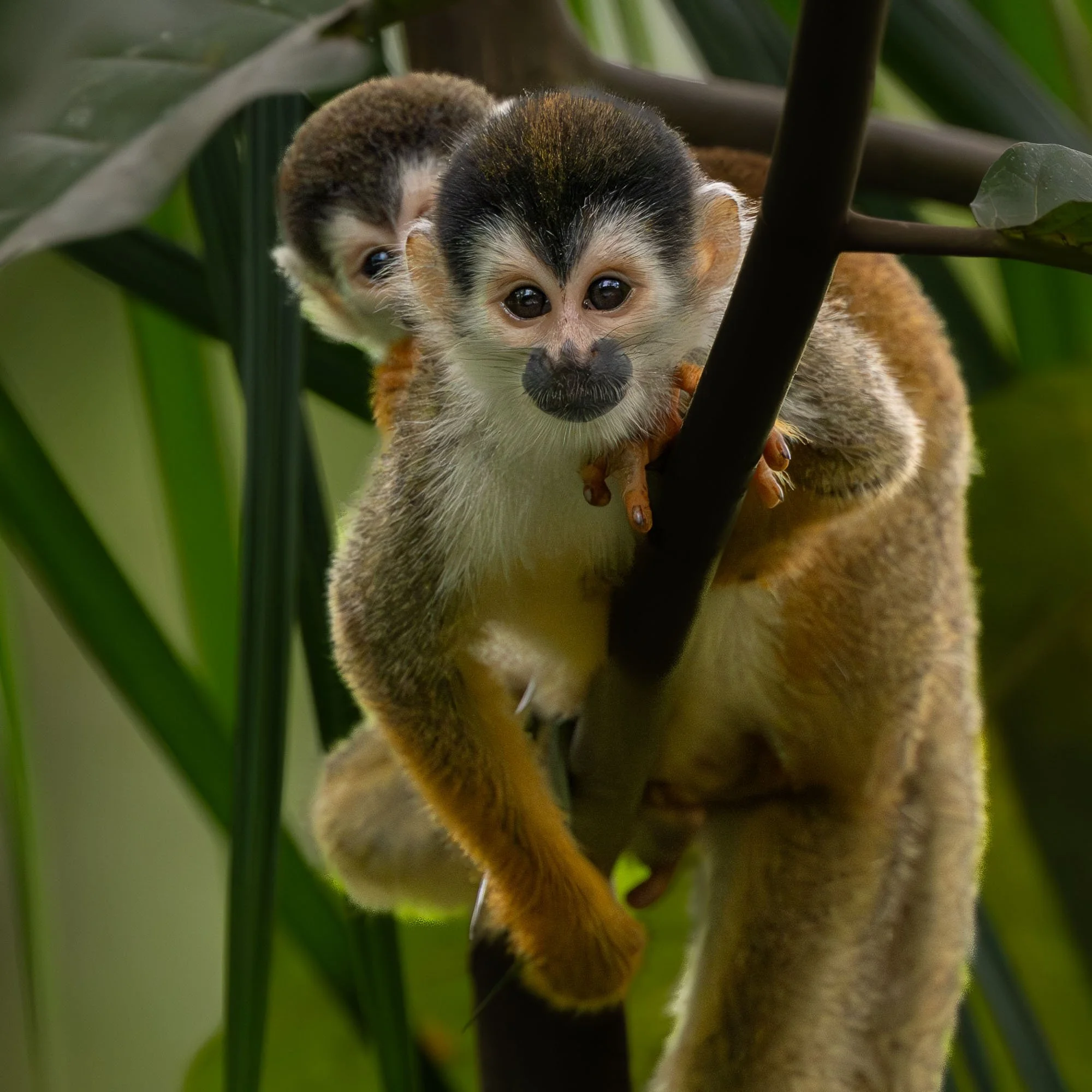
A young Central American squirrel monkey looks out while riding with an adult.
I traveled to Costa Rica’s Osa Peninsula hoping to photograph its extraordinary wildlife. I expected color, movement, unfamiliar sounds, and the challenges of working in a tropical rainforest. Afterall, Costa Rica is one of the most biodiverse places on earth. What I didn’t expect was to come home thinking so much about mothers.
From the beginning, the female monkeys captured my attention. Watching them travel through the canopy with babies clinging to their bodies, I found myself wondering how they managed it all, day after day, caring for young that would depend on them for months, and in some species, years. But several days into the trip, while photographing a family of white-faced capuchins, I looked through my viewfinder and saw something that reached me in an entirely different way.
Four species, one remarkable forest
The Osa Peninsula is home to all four of Costa Rica’s native monkey species: the mantled howler, Central American squirrel monkey, Geoffroy’s spider monkey, and Panamanian white-faced capuchin. I was fortunate to photograph mothers and young from each of them. They are very different monkeys, but throughout the trip I kept returning to one shared experience: raising a youngster in the trees.
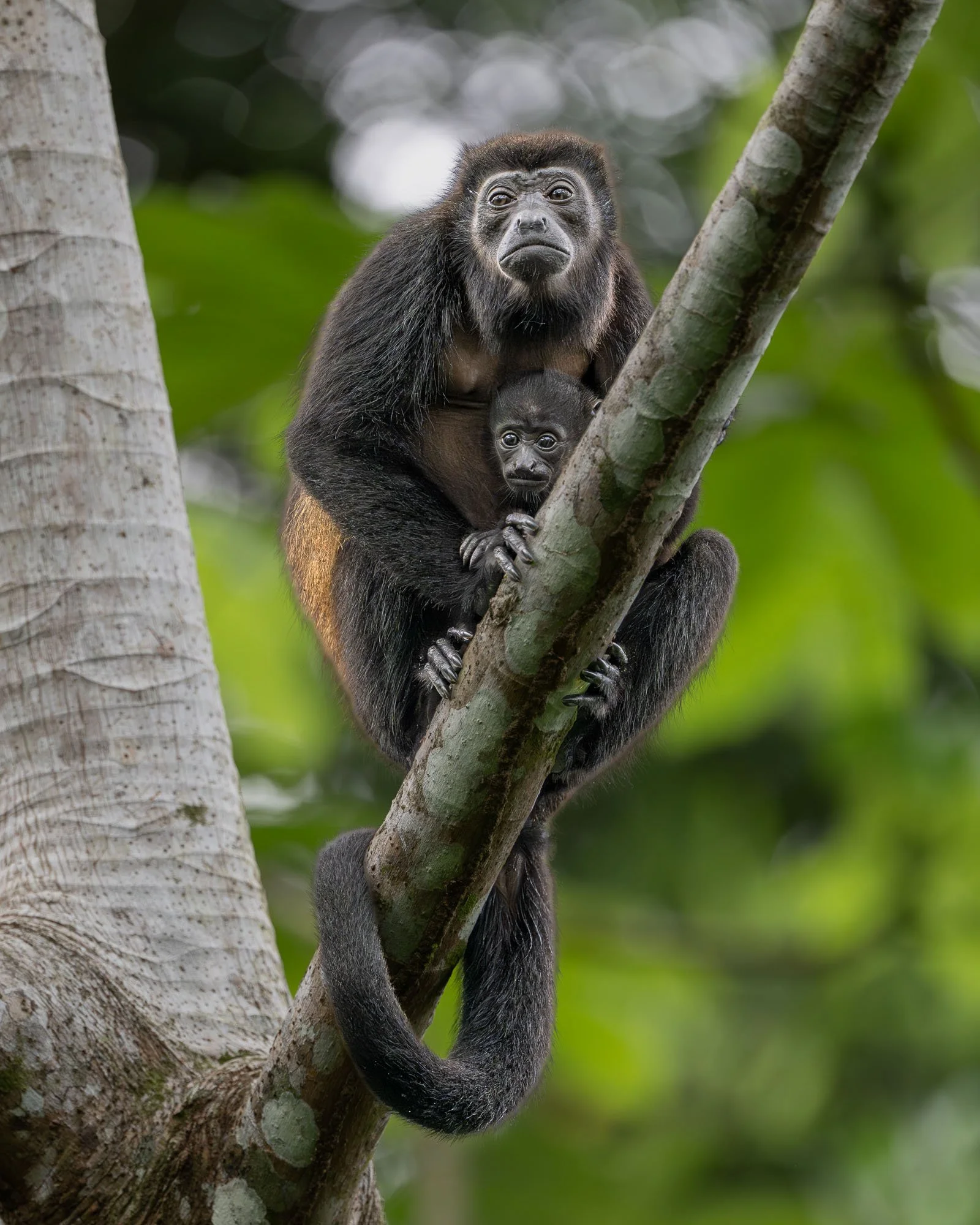
A mantled howler monkey with her infant, high in the rainforest canopy.
Motherhood in the Canopy
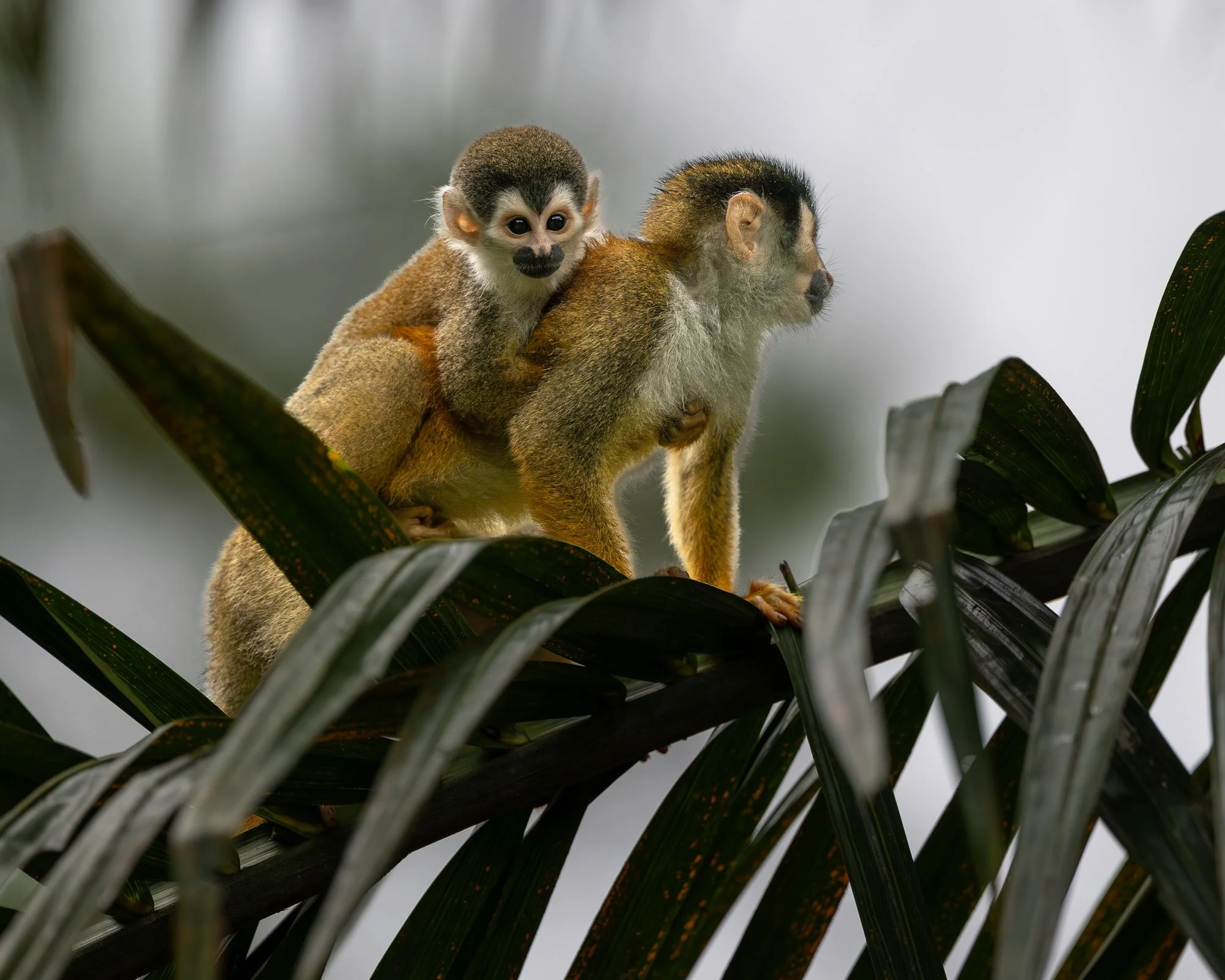
A squirrel monkey youngster rides securely on an adult’s back.
Imagine moving through a forest where every step is a branch, every route is three-dimensional, and much of your world is suspended above the ground. Now imagine doing it with an infant holding on to you.
The mothers still needed to travel, feed, rest, and keep pace with their groups. I watched youngsters cling while adults climbed, stretched, and negotiated openings in the foliage. What appeared effortless through the lens seemed, the longer I watched, to demand extraordinary strength, balance, and coordination.
Spider monkeys made the challenge especially visible. Their long limbs and grasping tails are suited to a life of movement among branches. Yet even as an adult moved and reached for food, a tiny youngster could remain attached to her body. I was struck by how normal this immense responsibility seemed in their daily lives.
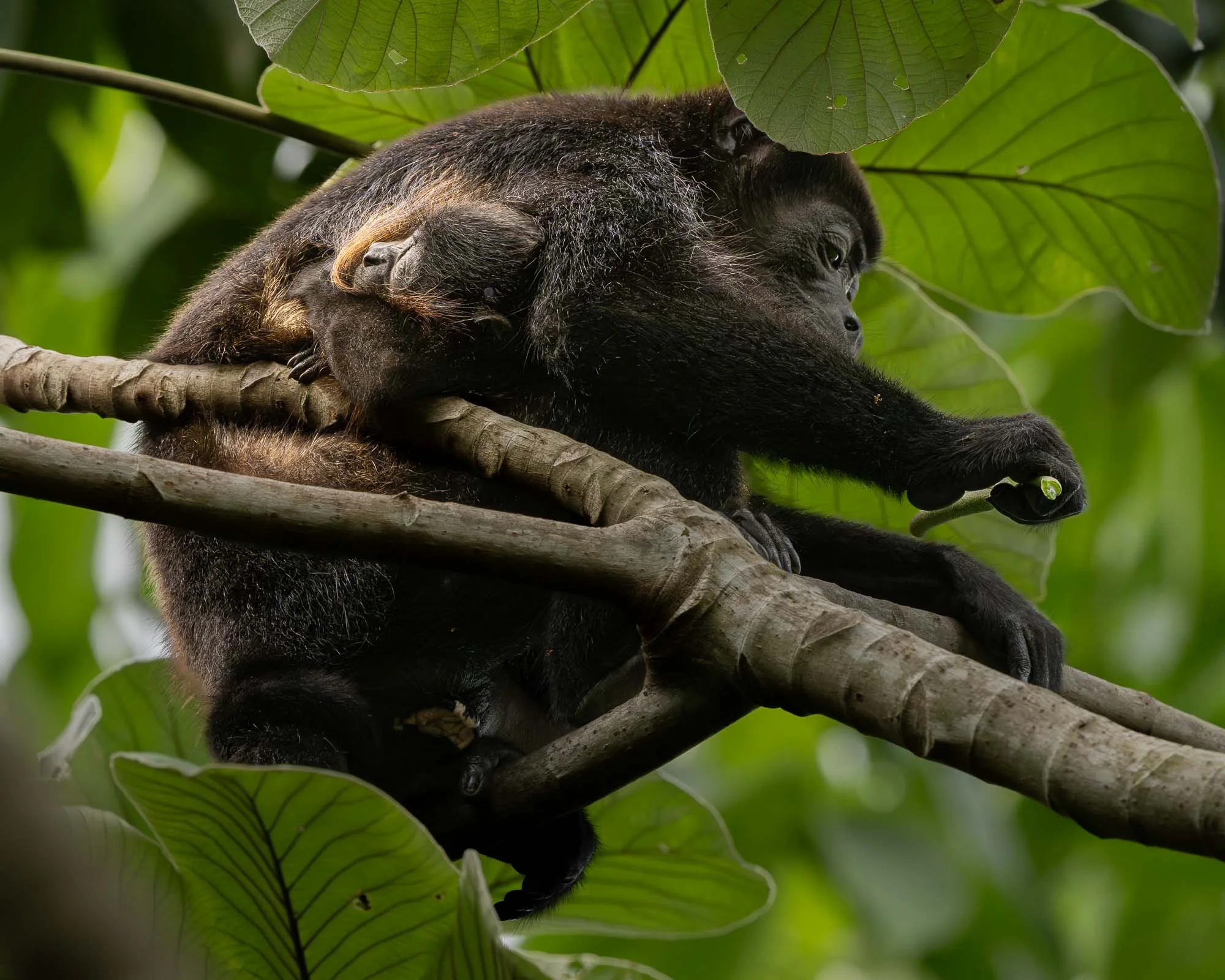
A howler monkey stops for a snack with her infant pressed close.
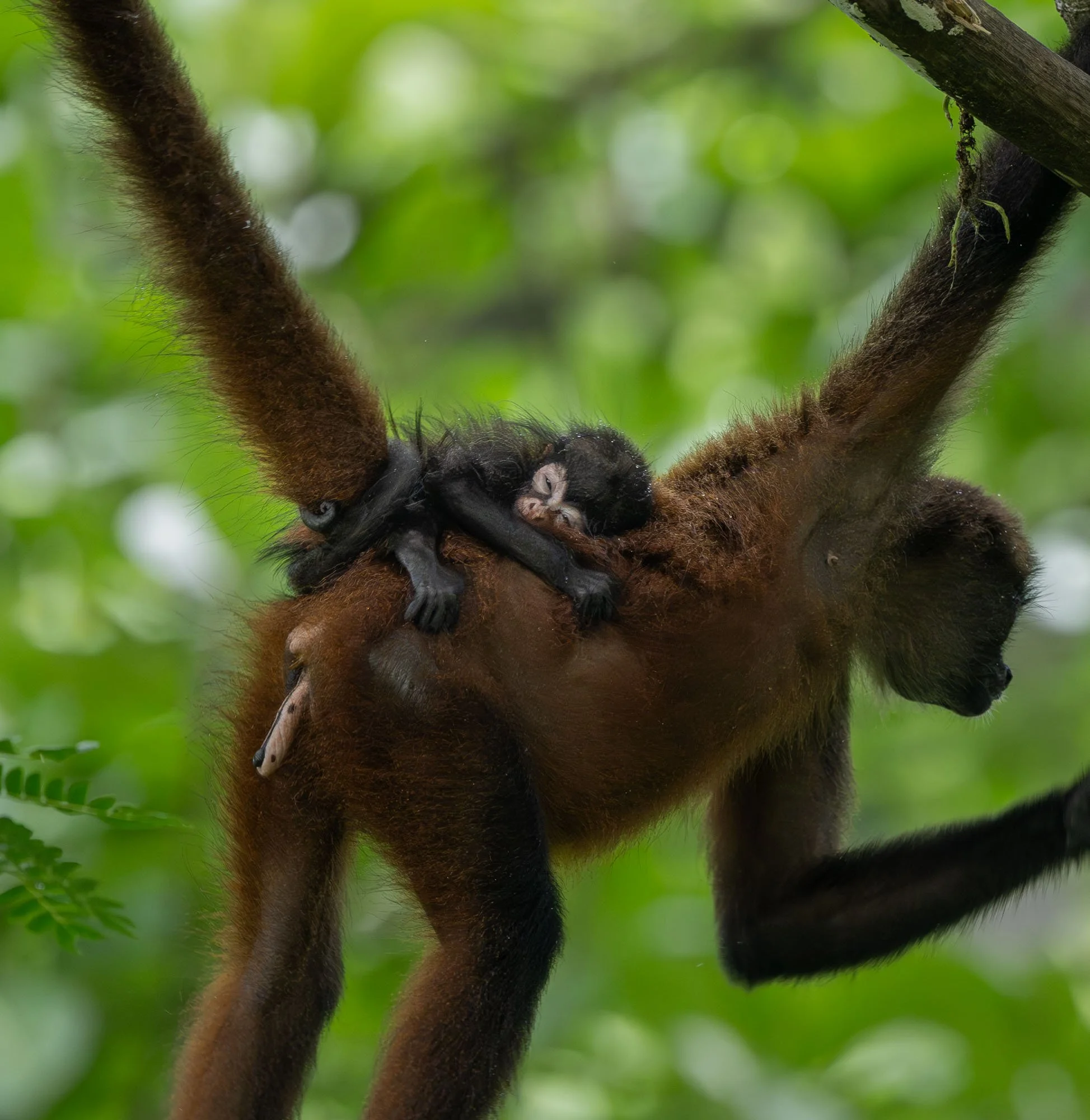
A spider monkey infant clings tightly as the adult moves through the canopy.
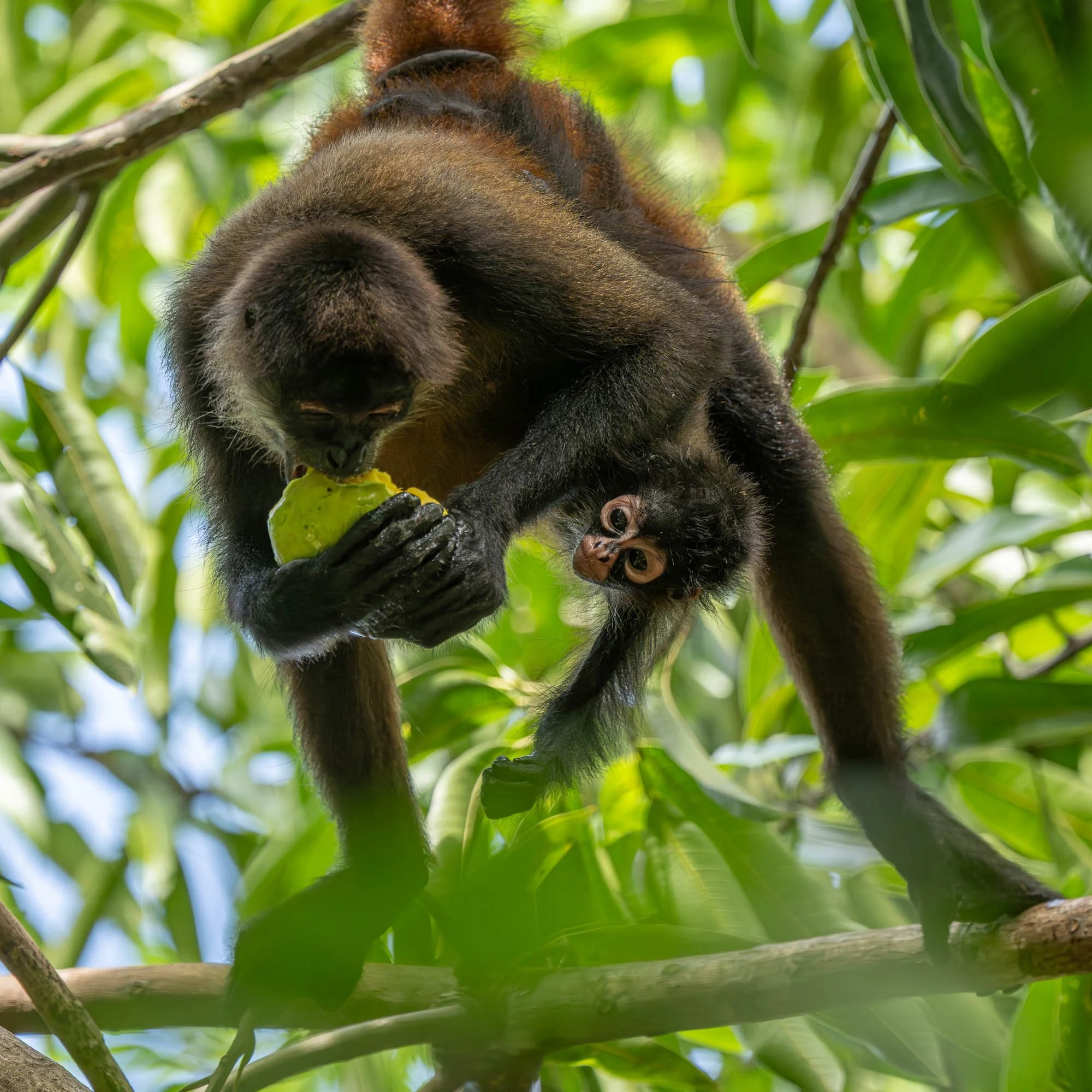
Even while feeding, a spider monkey carries an infant beneath her body.
The moment in the viewfinder
Then came the capuchins.
I was watching through my camera’s viewfinder, concentrating on the interaction in front of me. At first, I didn’t fully understand what I was seeing. Then it registered: the baby was nursing. That alone touched me deeply. But as I continued watching, I noticed something even more remarkable. The baby was looking directly into its mother’s eyes.
That was the moment the monkeys stole my heart. I had already admired these mothers for the extraordinary demands of raising their young in the rainforest canopy. But here, in this quiet moment between mother and infant, I was witnessing something so familiar, so remarkably human, that I felt an emotional connection I had never anticipated.
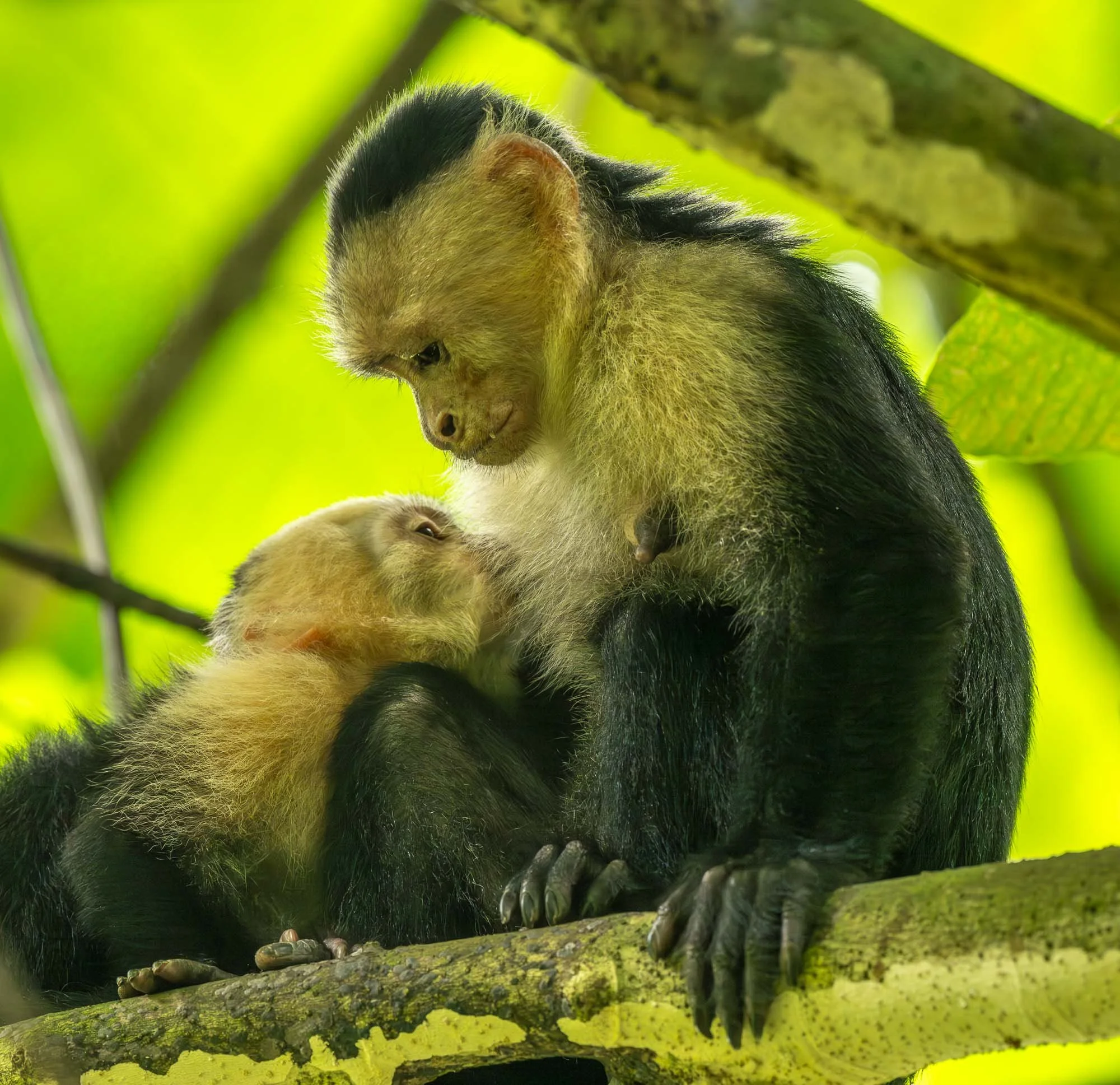
A white-faced capuchin infant nurses while the adult sits on a branch.
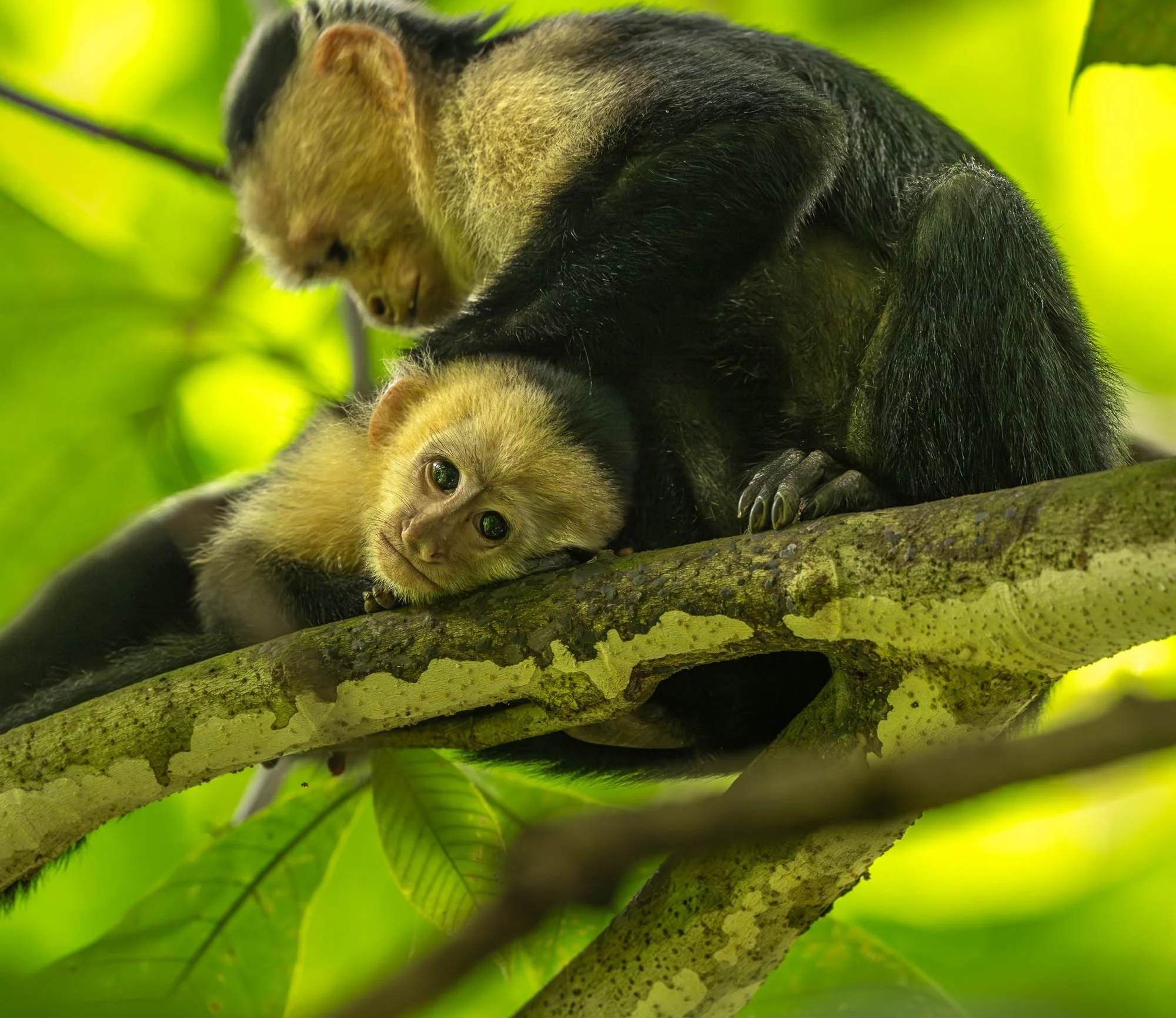
A white-faced capuchin attends closely to a youngster resting on a branch.
In another quiet moment, I watched a capuchin attend to a youngster with the close, deliberate contact we associate with grooming. I found myself looking less for action and more for the relationship. I still wanted a photograph, of course. But for those moments, the most important thing happening was not photographic.
Why these moments felt familiar
We are primates, too. Nursing, prolonged infant dependence, and close physical contact are part of a broad biological story that humans share with other primates. Grooming can remove debris and parasites, but it can also help maintain social relationships. Primatologists have studied how maternal contact and caregiving contribute to infant development and social life.
That doesn’t mean I can know what an individual monkey was thinking or feeling. I can only describe what I witnessed: carrying, nursing, grooming, feeding, and the persistent closeness between mothers and their young. But my emotional response was undeniable. What I felt was tenderness, a profound connection, and a deep respect for these remarkable mothers.
What I brought home
I went to the Osa Peninsula looking for wildlife photographs. I returned with 15,000 of those photographs, but also with a deeper respect for the females who spend their days raising young in that demanding world. First, they impressed me with their physical abilities. Then, through the viewfinder, a nursing capuchin and her youngster touched something much more personal.
The monkeys stole my heart not because I imagined they were human, but because, in witnessing their extraordinary devotion to their young, I recognized something deeply familiar and profoundly moving.